Educational and independent — not medical advice, and no one paid for any conclusion on this page.
What is gynecomastia? A plain-language explanation.
It's a real medical condition affecting roughly one in three men at some point. Here's what it actually is — and what it isn't.

Gynecomastia is enlargement of the male breast caused by growth of glandular tissue — actual breast gland, not fat. It is benign, it is extremely common, and it is one of the most silently carried conditions in men's health. If you have just found this word for the first time, the two most useful facts are these: you are not unusual, and what you have has a name, a cause, and a set of real options.
What it actually is
Behind every male nipple sits a small amount of dormant breast gland. When the hormonal balance between testosterone and estrogen shifts — even slightly, even temporarily — that gland can wake up and grow. The result is a firm, rubbery disc of tissue under the areola, sometimes tender, sometimes on one side more than the other. That firmness is the signature: gland feels distinctly different from the soft, even give of fat.
This is why the distinction between gynecomastia and simple chest fat matters so much. Fat responds to diet and training. Gland does not. Two chests can look identical in a t-shirt and need completely different answers — which is why the pinch test, covered in its own guide, is the first honest step.
Why it happens
The common thread is always the same — estrogen activity rising relative to testosterone — but the triggers vary by the season of life:
- Puberty. Hormones surge unevenly, and roughly half of adolescent boys develop some degree of gynecomastia. In most of them it settles on its own within six months to a couple of years.
- Medication and substances. A long list can tip the balance: spironolactone, some acid reflux and psychiatric medications, anti-androgens used for prostate conditions, anabolic steroids, and heavy alcohol use among them. Sometimes stopping the trigger — with a doctor, never abruptly on your own — is the treatment.
- Age. From roughly 50 onward, testosterone drifts down while body fat (which converts testosterone to estrogen) drifts up. Gynecomastia becomes common again.
- Weight. Higher body fat both adds soft tissue to the chest and shifts hormones toward estrogen — so weight and gland often travel together, which is why "is it fat or gland?" is rarely a clean either/or.
Sometimes no trigger is ever found. That is common and does not mean something was missed.
The four grades
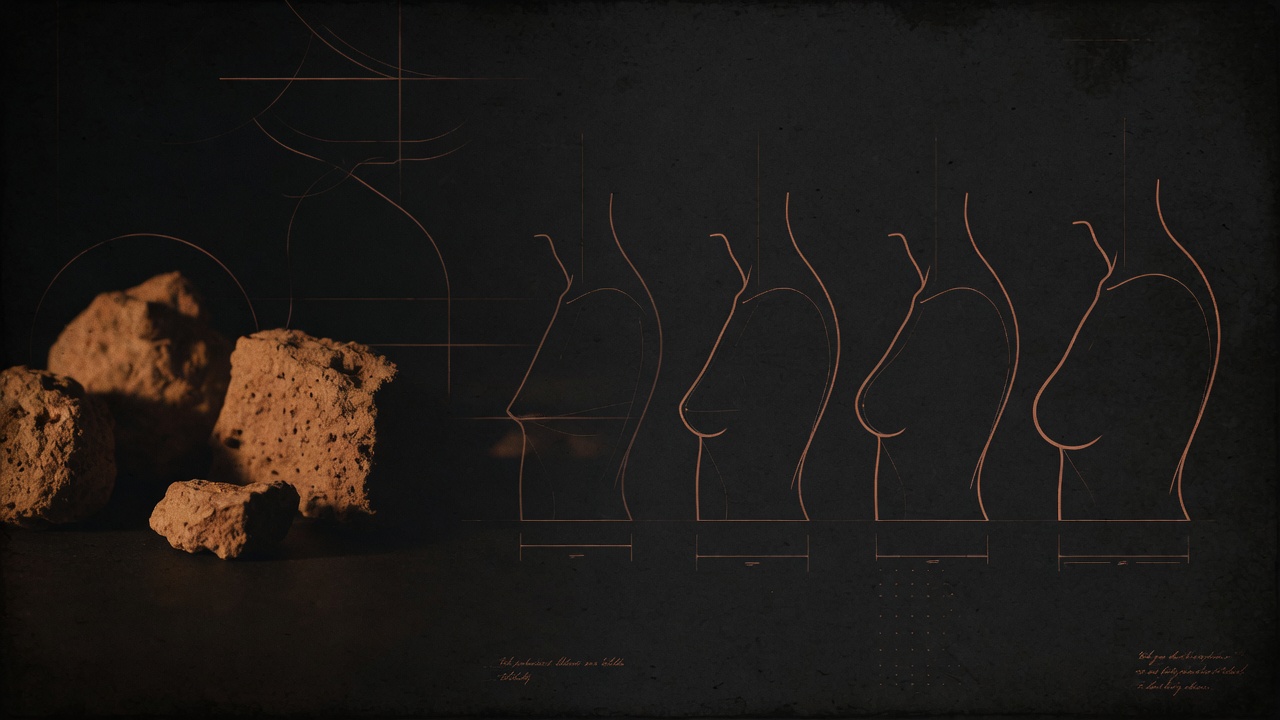
Clinicians describe severity in four grades, and the grade — more than anything else — shapes what the options look like. Grade 1 is a small firm button behind the areola, hideable but always there to its owner. Grade 2 is a moderate, visible mound, skin still tight — the most common presentation. Grade 3 adds real volume with the skin beginning to stretch. Grade 4 means significant, breast-like enlargement with loose skin. Our grade guide draws each one and explains what changes at each step.
When it deserves a doctor's eyes promptly
Gynecomastia itself is benign. But a few presentations should be examined without waiting: a hard, fixed lump rather than a rubbery mobile disc; enlargement on one side only with skin changes or nipple discharge; or rapid recent growth in an older man. Male breast cancer is rare — about one percent of all breast cancers — but it exists, and ruling it out is quick.
Half the weight of this condition is carrying it alone. The condition is common; the silence is the unusual part.
Recent-onset gynecomastia in a young man is also worth one proper conversation with a clinician — occasionally it points to something hormonal worth checking, and if medication is ever going to help, it works best early, before the tissue turns fibrous and permanent.
The honest bottom line
If the tissue has been there, stable, for more than a year or two, it almost never disappears on its own — and no exercise, cream, or supplement removes gland. From there the real choice is simple and personal: live with it knowingly, or have it removed in what is, in experienced hands, a routine day-surgery. Both are legitimate. What you no longer have to do is wonder what it is.
↳ Common questions
How common is gynecomastia?
Very. Estimates put it at roughly one in three men at some point in life, with peaks during puberty and again after about age 50. If it feels like you're the only one, you're not — most men just never say it out loud.
Is gynecomastia genetic?
Not directly inherited like eye colour, but genetics influence the hormone balance and fat-distribution patterns that make some men more prone to it. Family history can raise your odds, but most cases trace to a hormonal or lifestyle trigger rather than a single 'gyno gene.'
What are the stages of gynecomastia?
Clinicians usually describe four grades, from Grade 1 (a small amount of tissue around the nipple, no excess skin) up to Grade 4 (significant enlargement with loose skin, closer to a female breast contour). The grade largely determines whether surgery is on the table — and which kind.
↳ See it on real men
Cases that fit what you just readUnderstanding
Gyno or chest fat? How to actually tell
A practical guide to the pinch test, the firmness test, and what each one is actually telling you.
Understanding
Steroid-induced gynecomastia, explained without judgment
What's actually happening biochemically, why it's so common, and what your real options are now.